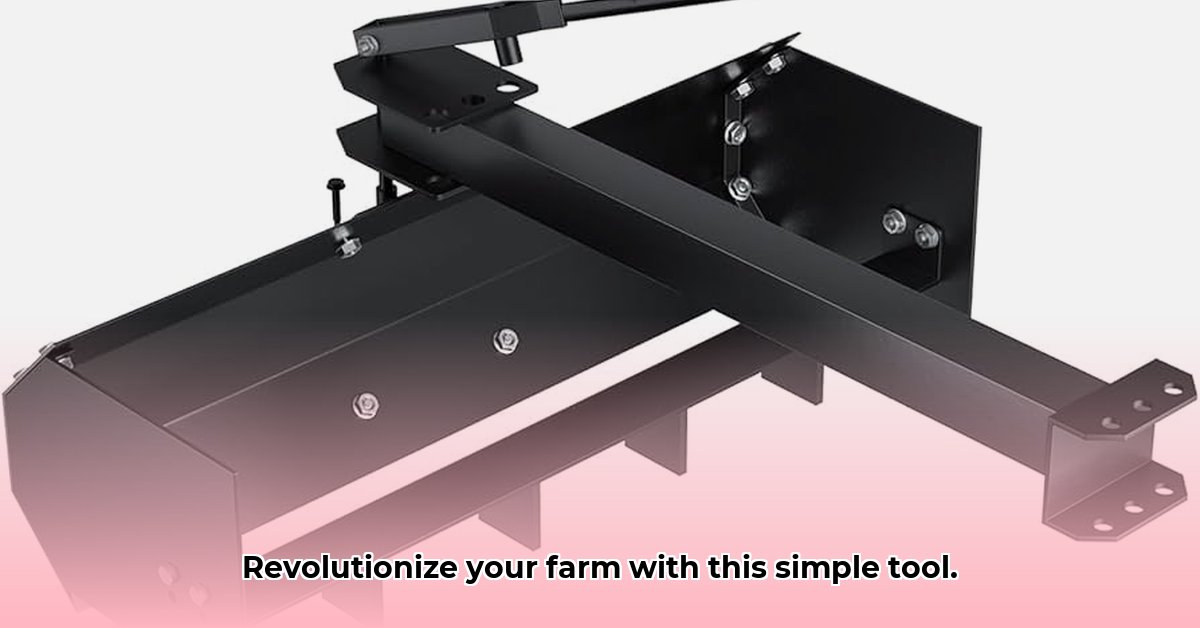
Pull-Behind Box Scrapers for Lawn Tractors: A Sustainable Farming Solution
Pull-behind box scrapers, often associated with yard work, are gaining traction among sustainable farmers. These versatile attachments offer a surprisingly effective approach to soil management, minimizing tillage and improving overall soil health. This article provides a comprehensive guide to help you determine if a box scraper is the right tool for your farm's needs. For more on pull-behind tillers, check out this helpful resource: learn more.
Getting to Know Your Soil: The Foundation of Sustainable Tillage
Before selecting a box scraper, thoroughly understand your soil type. Conduct a simple soil test to determine its composition (sandy, clay-like, loam, etc.). This information is crucial because soil texture directly influences the effectiveness of a box scraper. A sandy soil may be too easily disrupted, while a heavy clay soil might be too tough to work effectively. Matching the tool to your soil's characteristics is paramount for optimal results.
Choosing the Right Tool for the Job: A Variety of Options Await
Box scrapers come in various sizes and configurations, each designed for specific tasks. Some excel at leveling uneven ground, preparing seedbeds, or light tilling. Others are ideal for spreading compost or manure. Consider your primary objectives: Do you need to create perfectly level fields for planting? Are you aiming to improve soil drainage? Or is efficient fertilizer application your main focus? The selection process should align seamlessly with these goals.
Maximizing Your Investment: The Importance of Maintenance
Regular maintenance is critical for extending the lifespan and efficiency of your box scraper. Think of it as an investment in your farm's productivity. Regular inspection, lubrication (grease is your friend!), and blade sharpening prevents breakdowns, saving you time, money, and potential frustration. Ignoring these steps can lead to costly repairs or premature replacement—a situation easily avoided with proactive care.
Sustainable Farming: A Greener Approach with Box Scrapers
Sustainable farming practices prioritize minimizing environmental impact while maximizing yields. Box scrapers significantly contribute to this goal. Their shallow tillage is gentler on the soil compared to deep plowing. This results in less soil compaction, improved water infiltration, and healthier soil overall. Consequently, you'll likely see reduced fuel consumption, lower reliance on chemical fertilizers, and a more environmentally friendly operation. However, it’s crucial to understand that this method isn't a universal solution.
A Farmer's Story: Real-World Success with Box Scrapers
Mary, an organic farmer, uses a pull-behind box scraper to prepare seedbeds effectively. "The shallow tillage preserves the soil structure and its beneficial microbes," she notes. "This natural approach significantly improves nutrient cycling, reducing my reliance on external fertilizers, and the efficient manure spreading prevents any runoff." This success story highlights the practical benefits of box scrapers in sustainable agriculture.
Advantages and Disadvantages: A Balanced Perspective
Let's objectively weigh the pros and cons:
| Advantages | Disadvantages |
|---|---|
| Versatile tool for many farm tasks | Soil type greatly affects effectiveness |
| Reduced soil compaction | Requires precise operation and maintenance |
| Potentially lower fuel consumption | May not be suitable for all farm sizes |
| Improved soil health | Initial investment cost is significant |
| Efficient manure and compost application | There's a learning curve to master optimal use |
A Step-by-Step Guide: Mastering Box Scraper Operation
Using a pull-behind box scraper effectively involves these key steps:
- Assess Your Needs: Define precisely what tasks the scraper needs to accomplish. What are your farming goals?
- Choosing the Right Tool: Select a scraper that is compatible with your tractor and soil type. Consider quality; a well-built scraper will provide long-term benefits.
- Thorough Preparation: Clear the work area of any obstacles such as large rocks and debris.
- Careful Setting Adjustments: Adjust blade angle and depth to suit your specific needs. Experiment to find what works best for your conditions.
- Prioritize Safety: Always follow the manufacturer's instructions carefully.
- Consistent Maintenance: Clean and lubricate your scraper after each use.
Thinking Long-Term: Sustainability and Future Considerations
For smaller farms, a trial run on a limited area is recommended to assess the suitability of a box scraper. Larger operations should carefully weigh the costs and benefits against other methods. Long-term, investing in this efficient and sustainable equipment aligns with responsible farming practices. Explore potential grants or subsidies to help cover initial expenses.
How to Choose the Best Box Scraper for Sustainable Soil Tillage
Key Takeaways:
- Box scrapers offer diverse uses for various soil tillage tasks.
- Factor in your budget and field conditions when purchasing a box scraper.
- Consistent maintenance is crucial for extended lifespan and efficiency.
- Applying box scrapers correctly supports sustainable soil tillage practices.
Understanding Your Needs: Soil Type and Budget Considerations
Before exploring specific box scraper models, assess your needs objectively. What kind of soil do you manage? The soil's consistency influences the size and design of the scraper needed. Heavy clay requires a stronger model; lighter soils allow for lighter-duty equipment. Budget limitations also play a vital role. Used scrapers are more affordable but may necessitate increased maintenance. New models offer improved features but have a higher upfront cost.
Key Features to Consider: Specifications for Sustainable Tillage
Numerous factors determine the suitability of a box scraper for your sustainable soil management practices. Here are critical aspects:
- Size and Weight: Ensure compatibility with your tractor's capacity and soil type. An oversized scraper can overload your tractor; an undersized one will be inefficient.
- Blade Material: High-quality steel is essential for longevity and effective soil manipulation. Consider the steel's thickness and type for durability.
- Blade Adjustments: Adjustable blades offer versatility, allowing customization of tillage angle and depth for different tasks and soil conditions. This is key for sustainable soil management, preventing soil compaction and erosion.
- Hitch Type: Compatibility with your tractor's hitch mechanism is critical. Various hitch types exist and dictate which box scrapers are suitable.
- Additional Features: Some advanced models incorporate features like spring-loaded shanks to adapt to uneven terrain or rippers for deeper tillage.
Actionable Steps: A Practical Guide to Box Scraper Selection and Use
Step 1: Comprehensive Needs Assessment: Analyze your acreage, soil type, budget, and the specific tasks you require the box scraper to perform.
Step 2: Thorough Research and Comparison: Explore various models based on your needs. Read reviews, compare specifications, and evaluate the significance of each feature for your work.
Step 3: Selecting the Appropriate Size: Choose dimensions suitable for your tractor's capacity and the amount of material you need to move. Avoid overloading your tractor.
Step 4: Precise Setup and Operation: Follow the manufacturer’s instructions carefully for safe and efficient operation. Adjust blade angle and depth to suit your soil conditions.
Step 5: Consistent and Regular Maintenance: Clean your box scraper after each use. Lubricate moving parts regularly. Inspect frequently for wear and tear and address any damage promptly.
Box Scrapers vs. Other Tillers: A Comparative Analysis
Box scrapers aren't the only soil tillage option. Alternatives such as disc harrows or chisel plows offer different capabilities. Box scrapers are excellent for leveling, material movement, and light tilling. They are versatile, relatively inexpensive, and suitable for many sustainable practices. However, deeper soil preparation may necessitate other tools. A disc harrow, for instance, is better for seedbed preparation, while a chisel plow might be needed for breaking up heavily compacted ground.
Maintaining a Sustainable Approach: Holistic Soil Management
Remember, sustainable soil tillage goes beyond using a box scraper correctly. Rotating crops, using cover crops, and managing your tillage practices holistically all contribute to achieving your sustainable farming objectives. Selecting a box scraper is one important step towards a more efficient and environmentally responsible farm operation.